Legal Heir Certificate Services in India & Legal Help
When a person dies without a Will, the family needs a legal heir certificate. This document proves who the legal heirs are under Indian law. Our advocates help you make family tree papers. We guide you through revenue office checks. We also help you transfer property and claim bank funds quickly.
When a Legal Heir Certificate is Not Enough
- Demat Shares and High-Value Funds: Indian banks often reject revenue papers for sums above 5 lakh rupees. For higher sums, you need a court Succession Certificate under Section 372 of the Indian Succession Act.
- Sibling Disputes: Revenue officers cannot decide family disputes. If a sibling objects to the request, the officer rejects it. In such cases, heirs must go to civil court to divide the estate.
- Selling Inherited Property: This certificate updates names in tax records. However, selling the home requires all heirs to sign the sale deed. Alternatively, co-heirs can sign a registered Relinquishment Deed.
State Revenue Protocols & 30-Second Heir Checker
Each state in India has its own revenue rules for heir certificates. Select your state or check your legal heirs and required papers below.
How Legal Heir Certificates Work in Your State
Surviving Member Certificate (SMC)
In Delhi, the revenue office issues the Surviving Member Certificate. This document is needed to update DDA and municipal land records. It also helps heirs claim bank funds.
- Original Death Certificate of Deceased from MCD / NDMC
- Aadhaar card and voter ID of all surviving family members
- Self-declaration / Family Tree Affidavit notarized on Rs 10 stamp paper
- Surviving members' joint photograph with the applicant
- Proof of deceased's permanent address in Delhi (Electricity bill / Registry)
Who Are the Rightful Legal Heirs in Your Family Situation?
Select your family details below. Find out who has inheritance rights, what papers you need, and whether you require sibling consent letters.
Rightful Heirs: Wife, Sons, Daughters & Mother
Under Section 8 of the Hindu Succession Act, 1956, the surviving wife, all sons, all daughters, and the mother are Class 1 heirs. They inherit equal shares. The father is a Class 2 heir. Thus, the father has no share if any Class 1 heir is alive.
- Get the death certificate from the local registrar
- A lawyer drafts the family tree affidavit
- File the form on the state portal or revenue office
- The local revenue inspector completes the home visit
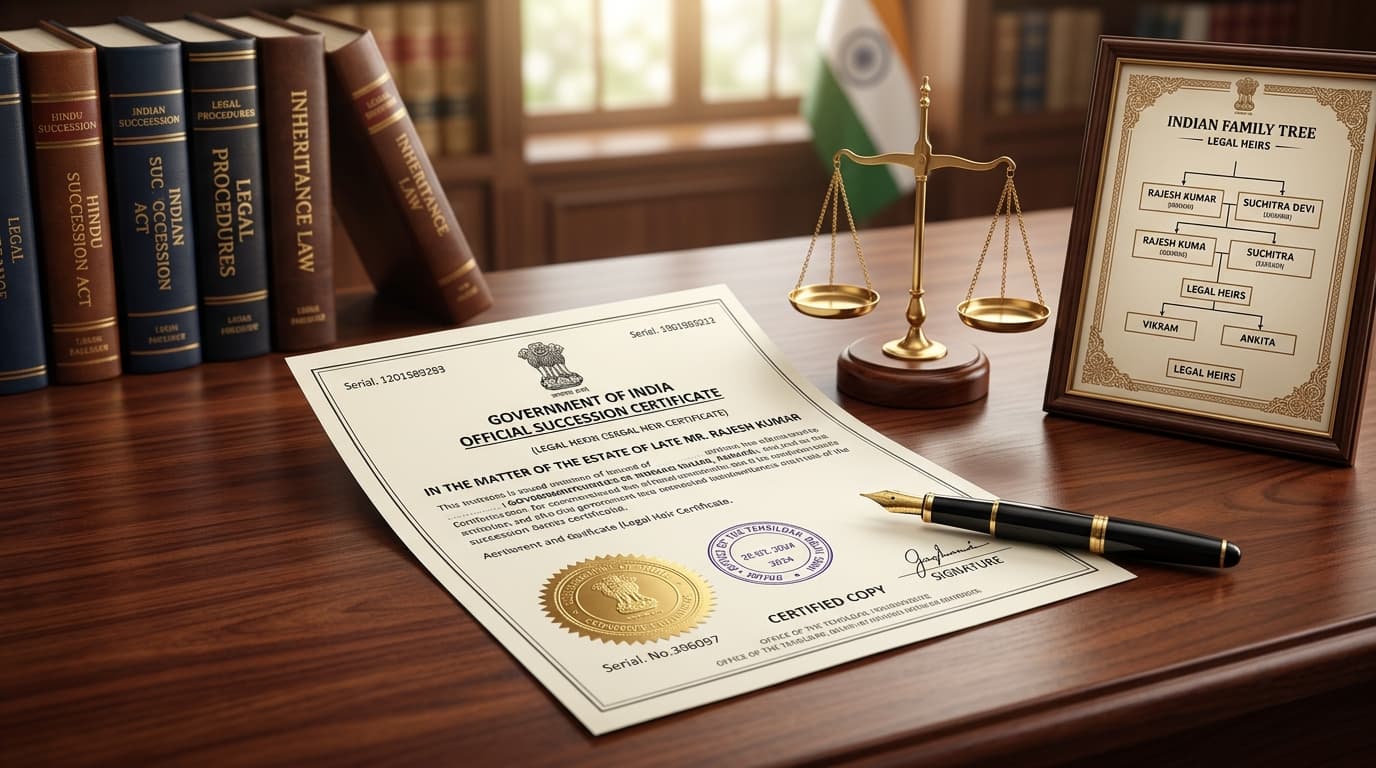
Official Legal Heir Document Anatomy
Here is how an official succession paper looks in India. It includes an official state seal, revenue office stamp, and a verified family tree.
Legal Heir Certificate vs Court Succession Certificate
Choosing the right legal path saves you time and money. Check the differences between revenue certificates and court orders below.
| Legal Feature | Legal Heir Certificate | Court Succession Certificate | Letter of Administration |
|---|---|---|---|
| Issuing Authority | Tehsildar / SDM / Local Revenue Office | Civil District Court (District Judge) | District Court / High Court Bench |
| Governing Statute | State Revenue Manuals & Municipal Rules | Part X (Section 370) Indian Succession Act | Chapter II Indian Succession Act, 1925 |
| Average Turnaround | 15 to 30 Working Days (Summary Check) | 6 to 12 Months (Court Notice & Paper Ads) | 8 to 18 Months (Formal Court Trial) |
| Official Cost & Fees | Nominal Government Fee (Rs 50 to Rs 500) | Court Fee (2% to 7% of Total Asset Value) | High Court Fee & Administration Bond |
| Asset Applicability | Land records, pensions, PF & small bank funds | Company shares, mutual funds & bank deposits | Full estate when no valid Will exists |
| Contested Dispute Power | None; Officer cancels if siblings object | Full Judicial Power; Judge decides claims | Full Title; Conclusive against all parties |
How to Get a Legal Heir Certificate in India
Follow this 5-step roadmap made by our high court lawyers. It helps your application pass local revenue checks without delay.
Get Death Certificate
Get the official death paper from the municipal registrar where the person died.
Draft Family Affidavit
A lawyer drafts the family tree affidavit on stamp paper with heir ID cards.
Submit Revenue Request
Submit the form on the state web portal or at the local Tehsildar office.
Field Check & Report
The local Patwari or revenue officer visits the home and checks all family members.
Digital Certificate Issued
The Tehsildar signs and issues the digital QR-coded certificate for bank and land records.
Handling Sibling Disputes, Sisters & NRI Co-Heirs
Estate issues often start when siblings disagree or live abroad. Sometimes brothers try to leave married sisters out of property papers.
Under Indian law, married daughters have equal rights by birth. The Supreme Court confirmed this in the Vineeta Sharma ruling. If one family member wants to keep the house, other heirs can sign a registered Relinquishment Deed. For heirs living in the US, UK, or UAE, our team drafts embassy-stamped powers of attorney. We ensure your family settles property peacefully.
Frequently Asked Questions on Legal Heir Certificates
Here are clear legal answers from our team at AMA Legal Solutions:
What is a Legal Heir Certificate and who issues it in India?
A Legal Heir Certificate is an official document from the local revenue office. It is called Varisu in Tamil Nadu, Waris Praman Patra in Uttar Pradesh, and Surviving Member Certificate in Delhi. A Tehsildar or Sub-Divisional Magistrate issues it. The paper lists all living family heirs of a person who died without a Will. It helps heirs claim bank money, pension dues, and land title.
Who is entitled to be named in a Legal Heir Certificate under Hindu Law?
Under Section 8 of the Hindu Succession Act, 1956, Class 1 legal heirs inherit equally. For a deceased man, Class 1 heirs include his wife, all sons, all daughters, and his mother. They share the property equally. The father of the deceased is a Class 2 heir. Thus, the father cannot claim if any Class 1 heir is alive.
Can a married daughter be excluded from a Legal Heir Certificate?
No. In 2020, the Supreme Court ruled in the Vineeta Sharma case that daughters have equal birth rights in family property. Marriage does not change a daughter's legal status. A married daughter remains a Class 1 legal heir. Leaving a married daughter out of the certificate is illegal and makes the document invalid.
What is the difference between a Legal Heir Certificate and a Court Succession Certificate?
A legal heir paper is a local revenue document from a Tehsildar. It takes 15 to 30 days and costs very little. Families use it for municipal property tax records, pensions, and small bank claims. On the other hand, a Succession Certificate comes from a civil court under the Indian Succession Act. It takes 6 to 12 months and requires court fees. Banks demand it to transfer company shares, mutual funds, and large bank deposits.
Can a Legal Heir Certificate be used to sell or transfer ancestral property?
No. The certificate proves family ties, but it is not a title deed. It only updates names in municipal tax registers. To sell the property, all legal heirs must sign the sale deed. If one heir wants full ownership, other heirs can sign a registered Release Deed (Haq Tyag) at the sub-registrar office.
What documents are required to apply for a Legal Heir Certificate?
You need the original death certificate of the deceased person. You also need Aadhaar cards and voter IDs of all surviving heirs. In addition, submit a family ration card or Parivar register copy. A lawyer drafts a family tree affidavit on stamp paper. Finally, if one heir applies, other heirs provide signed consent letters.
What happens if one sibling or co-heir refuses to sign the NOC or cooperate?
Revenue officers have no power to decide family disputes. If a brother or sister objects, the Tehsildar will reject the application. In this situation, the family must resolve the dispute through an advocate. Our lawyers help you prepare a formal partition deed or file a case in civil court.
Can Non-Resident Indians (NRIs) apply for an Indian Legal Heir Certificate from abroad?
Yes. An NRI heir does not need to travel to India. The overseas heir can sign a Special Power of Attorney abroad. In Hague Convention countries like the USA or UK, you get it apostilled. In the UAE, you get it stamped at the Indian Embassy. Then, your appointed family member or lawyer submits the papers in India.
Explore related statutory guides and calculators to resolve inheritance questions:
This statutory guide follows the Hindu Succession Act, 1956 and state revenue rules. It provides general legal information. For complex family property disputes, consult our succession advocates directly.